
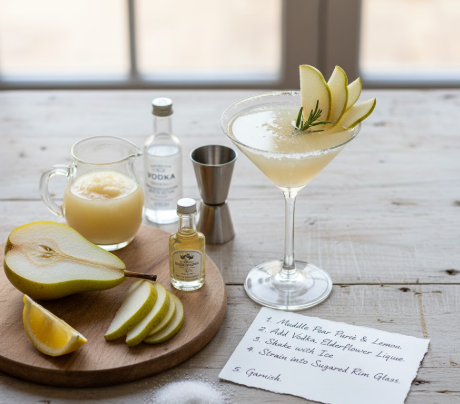
Martinis often bring an air of sophistication, yet the fruity and mellow vibe of a pear martini adds an inviting touch that is hard to resist. Blending smooth vodka with the delicate sweetness of pear offers a delightful surprise, even for seasoned cocktail enthusiasts. With ingredients like pear liqueur and fresh juices within reach, preparing this drink can transform any ordinary evening into a memorable occasion.
What makes a pear martini unique?
The pear martini stands out among fruit-based cocktails thanks to its light but vibrant profile. Rather than leaning toward tartness, it emphasizes smoothness—especially when crafted with pear nectar or pear juice. Finishing touches such as elderflower liqueur lend each sip layers of aroma and depth.
There are many variations, some featuring ripe fresh pear slices for garnish or muddling. Each version brings a subtle twist, but all feature that irresistible blend of crisp spirit and mellow pear flavor.
Main ingredients to get started
Choosing fresh, high-quality ingredients truly elevates the final result. Whether favoring natural sweetness or preferring a tart kick, these basic components balance beautifully when thoughtfully mixed in a classic cocktail shaker.
This martini does not require rare spirits. A few familiar bar staples come together, making it surprisingly easy to craft at home.
Choosing the right vodka for a pear martini
Some prefer pear vodka to amplify the fruity notes from the base up. Using regular vodka results in a cleaner, more subdued fruit presence—ideal if a subtle approach is desired. Either way, mixing with pear puree or juice ensures robust flavor, while vodka serves as a blank canvas for additional ingredients.
Switching between flavored and unflavored options allows for small adjustments, making it simple to personalize the drink. Chilling both the vodka and the glass beforehand enhances the entire experience.
Pear juice, nectar, and puree: which fits best?
Pear juice delivers clarity and a bright essence, letting the spirit shine through. Pear nectar creates a thicker, creamier mouthfeel, bringing a richer tone to the cocktail. Those who appreciate texture might opt for pear puree; it adds lushness but should be strained before shaking to avoid excessive pulp.
Most supermarkets carry at least two of these options. If using only pear vodka without juice or nectar, the resulting martini may feel lighter, but still very enjoyable.
How to mix a perfect pear martini?
Precision and a touch of flair are key when preparing a pear martini. Accurate measuring and timing ensure everything blends seamlessly.
A good-quality cocktail shaker helps meld flavors quickly, chills the liquid to perfection, and provides a hint of frothy smoothness on top.
Cocktail ratio basics explained
For most recipes, start with 2 ounces of vodka (pear-infused or standard) as the foundation. Add 1 ounce pear nectar or pear juice for vibrant flavor. Complement with half an ounce elderflower liqueur to enhance aroma, and squeeze in a quarter ounce lemon juice for brightness. Finish with a splash of simple syrup to balance any tartness.
Fill the shaker with ice before mixing to prevent rapid dilution. Shake vigorously for around fifteen seconds until the outside feels frosty, then strain directly into a well-chilled martini glass.
Garnish ideas: finishing touches for visual appeal
Fresh pear makes an attractive and authentic garnish, whether sliced thinly or placed on a skewer. Some bartenders float a thin wheel inside the glass, while others create a fanned arrangement on the rim. Sprigs of mint or edible flowers add extra visual flair without overpowering the main flavors.
If lemon juice features in the recipe, a bit of zest or a twist enlivens the finish. Fresh garnishes signal care and make the drink instantly more appealing.
Pear martini recipe variations worth trying
Following the foundational formula yields a consistently delicious drink, but swapping just one ingredient opens up new possibilities. Classics always invite creativity.
Experimenting with a pear martini can mean introducing subtle contrasts or bold departures—there is flexibility in every pour.
Bringing extra herbal notes
Adding basil or thyme introduces a green, aromatic edge. Drop a sprig directly into the shaker before mixing, then double-strain to remove solids while keeping the fragrance. This adjustment pairs especially well with floral elderflower liqueur and livens up the character.
Alternatively, replace simple syrup with a homemade herb-infused version. Rosemary syrup, for instance, mingles beautifully with pear, adding complexity with little effort.
Boosting richness and sweetness
Incorporate a dash of vanilla extract or maple syrup alongside the sugar syrup to warm up the overall profile. For a dessert-inspired twist, rim the martini glass with cinnamon sugar or sprinkle diced candied ginger over the finished drink for added texture.
Combining pear nectar and apple juice creates a seasonal variation, ideal for autumn gatherings or festive tablescapes.
Pear martini tips for best results
Small tweaks often yield impressive improvements in taste and appearance. Experimentation builds confidence and helps develop a signature recipe that sparks conversation whenever a glass is raised.
- Always chill the glass before pouring, as this prevents quick dilution and cloudiness.
- Use freshly squeezed lemon juice rather than bottled for a brighter, fresher mix.
- Opt for homemade simple syrup—simply boil equal parts sugar and water until clear, then cool.
- Strain the pear puree or nectar if the pulp is excessive, avoiding an overly thick cocktail.
- Shake instead of stirring to guarantee silky, chilled smoothness.
Answers to popular questions about pear martinis
Can a pear martini be made without pear vodka?
Definitely. Regular vodka works perfectly well, especially when paired with pear nectar, pear juice, or strained pear puree. These elements infuse enough flavor, and sometimes the cleaner spirit profile lets subtler notes, like elderflower liqueur and citrus, truly stand out.
- Increase pear juice by half an ounce for extra boldness if desired.
- For layered flavor, try muddling a chunk of fresh pear with simple syrup first.
What’s the main difference between pear nectar and pear juice in cocktails?
Pear nectar contains thicker pulp and produces a creamier consistency, delivering pronounced sweetness and body to the drink. Pear juice is clearer and lighter, with a tangier note and a more watery feel. Both work well, depending on whether a richer or crisper martini is preferred.
| Ingredient | Texture | Taste |
|---|---|---|
| Pear nectar | Thick, pulpy | Sweeter, creamy |
| Pear juice | Light, clear | Subtle, crisp |
Is elderflower liqueur essential for a pear martini?
While elderflower liqueur is not essential, it significantly elevates the aroma and flavor. Many recipes include it to highlight the natural floral qualities of pear. If omitted, consider adding a drop of orange blossom water or substituting another floral liqueur for a similar effect.
- The cocktail remains delicious with just pear and lemon bases.
- Floral syrups or bitters can also substitute for a distinctive twist.
Which snacks pair well with a pear martini?
This martini complements both savory and sweet bites. Light cheese boards with brie, blue cheese, or aged gouda are always crowd-pleasers. For added crunch, serve with salty nuts or prosciutto-wrapped melon skewers. Thinly sliced fresh pears on crackers further emphasize the cocktail’s central theme.
- Soft cheeses
- Charcuterie selections (parma ham, salami)
- Honeyed nuts or fig jam